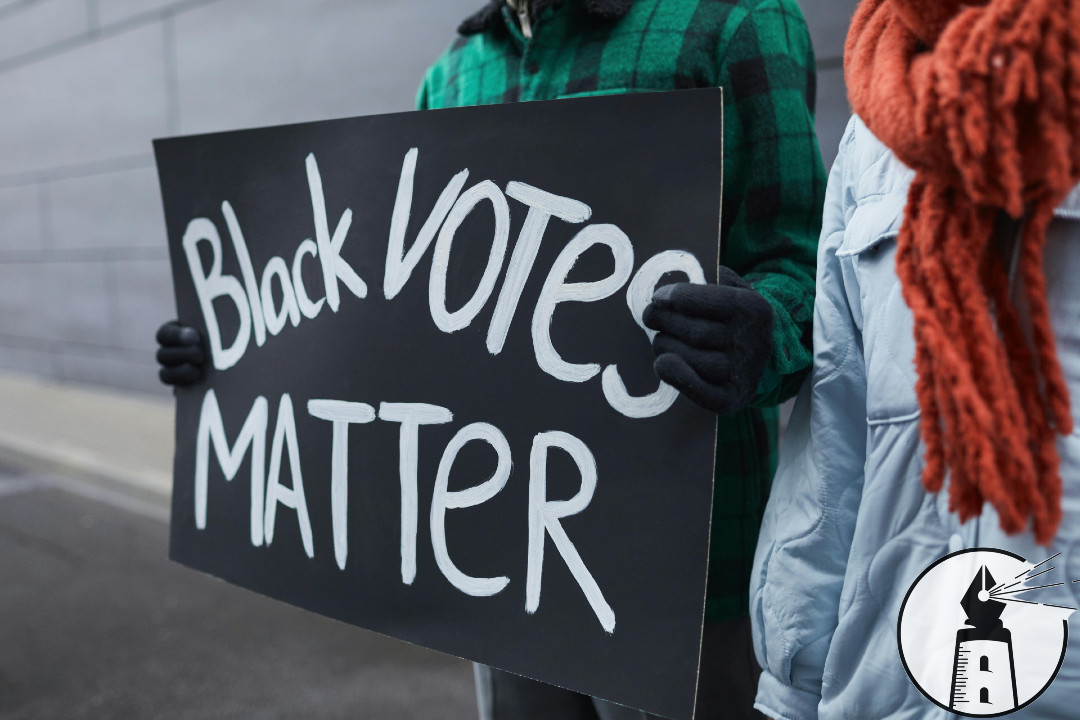
The U.S. Supreme Court’s recent decision allowing Alabama to use a Republican-favored congressional map for the 2026 midterm elections has reignited a longstanding debate about race, representation, and the future of voting rights in America.
The ruling does more than affect a single state’s congressional boundaries. It raises broader questions about how the nation interprets the protections established by the Voting Rights Act of 1965 and whether recent legal developments represent a fundamental shift in how courts approach claims of racial discrimination in elections.
For supporters of the decision, the ruling affirms state authority over redistricting and recognizes that political considerations often drive map drawing. For critics, it represents another step away from the federal protections that emerged during the civil rights era to combat racial discrimination in voting.
A Long Legal Battle
The dispute began after Alabama adopted a congressional map following the 2020 census. The state, where more than one-quarter of residents are Black, created a map with only one majority-Black district out of seven congressional districts.
Voting rights groups challenged the map, arguing that it diluted the voting power of Black residents and violated the Voting Rights Act. Lower federal courts agreed and repeatedly ordered Alabama to create a map that provided Black voters a realistic opportunity to elect candidates of their choice in two districts.
According to NPR, a three-judge federal panel later concluded that Alabama’s preferred map was “tainted by intentional race-based discrimination.” Nevertheless, the Supreme Court recently allowed the state to proceed with that map for the 2026 elections.
The decision means Alabama’s congressional delegation is likely to contain six Republican-leaning districts and one Democratic-leaning district rather than a map that offered two competitive districts for Black voters.
The Historical Context
To understand why the ruling has generated such strong reactions, it is necessary to understand the history of voting rights in the United States.
Following Reconstruction, many Southern states enacted measures designed to limit Black political participation. Poll taxes, literacy tests, grandfather clauses, and other restrictions were used to prevent African Americans from voting despite constitutional protections.
The Voting Rights Act of 1965 was enacted specifically to address those practices. The law outlawed many discriminatory voting restrictions and gave the federal government significant authority to intervene when states enacted election systems that disadvantaged minority voters.
According to the National Archives, the Voting Rights Act prohibited many of the practices that Southern states had used for decades to suppress Black political participation.
The law became one of the most significant civil rights achievements of the twentieth century and dramatically increased Black voter registration and political representation throughout the South.
Why Critics See Historical Echoes
Civil rights advocates do not generally argue that modern redistricting disputes are identical to literacy tests or poll taxes. Instead, they contend that both involve the same underlying question: whether minority voters are able to exercise meaningful political influence.
Critics point to the fact that lower court judges, including Republican-appointed judges, concluded that Alabama’s map intentionally discriminated against Black voters. Justice Sonia Sotomayor, writing in dissent, argued that the Supreme Court’s intervention undermined democratic principles and rewarded Alabama’s refusal to comply with earlier court rulings.
According to NPR, Sotomayor wrote that the Court’s action “debases the democratic process” and “corrodes the rule of law.”
Organizations representing the plaintiffs similarly argued that weakening protections against racial vote dilution risks reducing minority political influence even when minority populations are large enough to affect election outcomes.
The “Counterargument“
Supporters of the ruling reject comparisons to the Jim Crow era.
Alabama officials argue that the state’s maps reflect political rather than racial considerations and that federal courts have imposed unfair standards on the state for years. State leaders maintain that legislatures have broad authority to draw congressional districts and that courts should presume lawmakers are acting in good faith.
According to Reuters, Alabama officials viewed the ruling as a victory for state sovereignty and legislative discretion in redistricting.
Supporters also note that the Supreme Court’s recent voting rights decisions have emphasized race-neutral districting principles and have limited the circumstances under which race can be used as a factor in drawing districts.
From this perspective, the Court is not reviving discriminatory practices but instead moving away from race-conscious approaches to redistricting.
A Changing Voting Rights Landscape
Regardless of which interpretation prevails, there is little doubt that the legal landscape surrounding voting rights has changed significantly over the past decade.
Several Supreme Court decisions have narrowed federal oversight of election laws and redistricting practices. The result is that states now have greater flexibility in determining how electoral maps are drawn.
The Alabama decision fits within that broader trend. It suggests that future challenges based on claims of vote dilution may face a steeper uphill battle than they did in previous decades.
Legal scholars continue to debate whether these changes represent a restoration of state authority or a weakening of protections that were established during the civil rights movement.
What Happens Next
The immediate impact of the ruling will be felt in Alabama’s 2026 congressional elections. The longer-term consequences may extend far beyond one state.
Other states facing similar redistricting disputes are closely watching how courts interpret voting rights protections after the Supreme Court’s recent decisions. Future litigation is likely to test the boundaries of those rulings and determine how much protection remains available under federal voting rights law.
The broader debate is unlikely to disappear. Questions about representation, race, and political power have shaped American elections for generations. The Alabama case demonstrates that those questions remain unresolved.
Final Thoughts
The Supreme Court’s decision regarding Alabama’s congressional districts has become more than a dispute about map lines. It has become part of a larger national conversation about the meaning of voting rights in modern America.
Supporters view the ruling as a reaffirmation of state authority and race-neutral governance. Critics view it as a troubling retreat from protections that emerged from the civil rights era.
What is clear is that the decision will continue to influence debates about representation and electoral fairness long after the 2026 elections are over. Whether it ultimately marks a significant turning point in the history of voting rights will be a question for courts, lawmakers, historians, and voters in the years ahead.
—Greg Collier