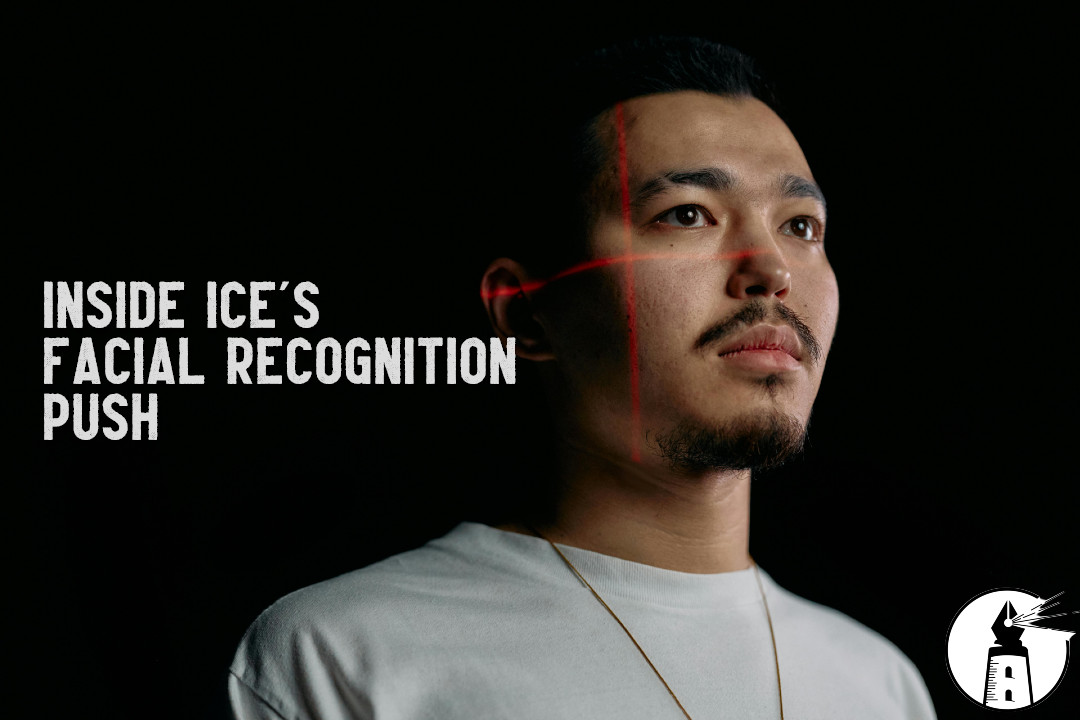
For years, debates about facial recognition technology largely centered on local police departments, airport security, and private sector data collection. More recently, however, a different concern has begun to attract bipartisan scrutiny. Immigration enforcement agencies are increasingly relying on facial recognition systems to identify, track, and detain individuals, often with little public transparency and limited judicial oversight.
Civil liberties advocates warn that the combination of artificial intelligence, mass surveillance, and immigration enforcement creates serious constitutional risks. Surprisingly, concern is no longer coming solely from traditional privacy groups or immigration activists. Lawmakers from across the political spectrum have begun questioning whether federal authorities are moving too quickly toward technology-driven enforcement tactics that may outpace existing legal protections.
At the center of the debate is a troubling question. What happens when government agencies can identify and detain people based on algorithmic matches rather than traditional warrants and investigations?
Facial Recognition Moves Into Immigration Enforcement
Facial recognition technology has expanded rapidly across federal agencies during the past decade. The Department of Homeland Security and Immigration and Customs Enforcement have both acknowledged using biometric systems to verify identities, investigate immigration violations, and assist in enforcement operations.
According to official documents published by the Department of Homeland Security, ICE has access to extensive biometric databases that include photographs collected from visa applications, border crossings, state driver’s license databases, and other government records. The agency has also worked with outside contractors that specialize in facial matching software.
A 2021 report issued by the Government Accountability Office found that multiple federal agencies were using facial recognition systems without always conducting comprehensive testing for accuracy or privacy impacts. The report specifically warned that agencies needed stronger oversight and more transparent policies regarding the use of biometric technology.
The concern is not merely theoretical. Researchers at the National Institute of Standards and Technology have repeatedly documented uneven accuracy rates among facial recognition systems, particularly involving minority populations, women, and individuals photographed under poor conditions. While the technology has improved significantly in recent years, experts continue to caution that false matches remain a serious possibility.
When such systems are used in criminal investigations, a mistaken identification can trigger additional investigative safeguards before an arrest occurs. Critics argue that immigration enforcement often operates differently. Administrative detentions can happen quickly, and individuals may face limited access to legal representation during the early stages of detention proceedings.
The Constitutional Questions Continue to Grow
The Fourth Amendment protects Americans against unreasonable searches and seizures. Traditionally, law enforcement officers seeking to detain someone generally need either a warrant, probable cause, or specific statutory authority.
Facial recognition complicates that framework because it introduces algorithmic decision-making into the identification process. Civil liberties organizations such as the American Civil Liberties Union and the Electronic Frontier Foundation have argued that facial recognition systems effectively enable continuous surveillance in public spaces without individualized suspicion.
Those concerns intensified after reports emerged that immigration enforcement operations may have relied heavily on facial recognition matches during workplace raids and field operations. Critics argue that using automated identification systems as the basis for detention risks creating a system where software effectively substitutes for judicial review.
Some conservative legal scholars have also expressed concern about the long-term implications. Skepticism toward unchecked federal surveillance has historically existed on both the political left and right. Questions surrounding government databases, warrantless monitoring, and executive branch power have repeatedly produced unusual bipartisan alliances.
This bipartisan discomfort reflects a broader realization that surveillance authorities created for one purpose rarely remain confined to their original mission. Technologies introduced for immigration enforcement today could eventually become standard tools in routine domestic policing tomorrow.
Immigration Enforcement Exists in a Different Legal Environment
One reason the issue has not received broader public attention is that immigration enforcement often operates within a separate legal framework from traditional criminal law enforcement.
Immigration proceedings are generally classified as civil rather than criminal matters. As a result, constitutional protections that are firmly established in criminal courts may apply differently in immigration cases. Federal courts have historically granted immigration authorities broader latitude at the border and during administrative proceedings.
That distinction has become increasingly controversial as enforcement agencies adopt tools that resemble advanced criminal surveillance systems. Critics argue that facial recognition technology combined with immigration databases effectively creates a nationwide tracking infrastructure that affects not only undocumented immigrants but also citizens and lawful residents whose images may exist in government systems.
A Georgetown Law Center on Privacy and Technology report found that federal agencies have gained access to hundreds of millions of photographs through partnerships with state motor vehicle departments and other government entities. In many cases, individuals whose photos were included never explicitly consented to their images being used for facial recognition searches.
Supporters of the technology argue that biometric identification helps prevent fraud, improves efficiency, and enhances national security. DHS officials have repeatedly stated that biometric systems help identify individuals who may use false identities or attempt to evade detection after deportation orders.
Yet even supporters acknowledge that safeguards are necessary. Questions remain about how long data is retained, how matches are verified, and whether individuals have meaningful opportunities to challenge erroneous identifications.
The Rise of AI Surveillance Raises New Risks
The facial recognition debate is unfolding during a larger national conversation about artificial intelligence and government power.
Unlike earlier surveillance systems that relied heavily on human analysis, modern AI systems can process enormous quantities of data in real time. Cameras connected to facial recognition databases can potentially identify individuals instantly in airports, streets, workplaces, or public gatherings.
Privacy advocates warn that such capabilities could fundamentally alter the relationship between citizens and the state. Public anonymity, long considered a normal part of democratic society, may gradually disappear if governments gain the ability to identify individuals continuously through automated systems.
Several cities, including San Francisco and Portland, have enacted restrictions on facial recognition use by local agencies. Some members of Congress have proposed federal regulations requiring warrants or stricter oversight before agencies can deploy facial recognition technologies.
At the same time, federal enforcement agencies continue expanding their biometric capabilities. The Department of Homeland Security’s own planning documents envision increasingly integrated biometric systems across border security, travel screening, and immigration enforcement operations.
This trend reflects a larger reality of modern governance. Once technological infrastructure is built, agencies often find new uses for it. Databases grow larger, software becomes more sophisticated, and temporary programs gradually become permanent.
Public Awareness Has Not Kept Pace
Despite the enormous implications, public discussion surrounding facial recognition in immigration enforcement has remained relatively limited compared to debates over social media privacy or consumer data collection.
Part of the reason may be the complexity of the issue itself. Immigration law, constitutional protections, artificial intelligence, and surveillance policy intersect in ways that are difficult to summarize in simple political narratives.
Another factor is that enforcement expansions often occur quietly through administrative policies rather than headline-grabbing legislation. Agencies may adopt new technologies incrementally, with little public debate until controversies emerge after the fact.
Yet the stakes extend far beyond immigration policy alone. Once facial recognition systems become deeply integrated into federal enforcement operations, rolling them back may prove extremely difficult.
The United States has historically balanced security concerns against civil liberties through judicial oversight, transparency, and constitutional safeguards. Critics fear that rapidly evolving surveillance technologies may undermine those protections before lawmakers and courts fully understand the consequences.
That concern increasingly transcends partisan politics. Americans who disagree sharply on immigration policy may still share common unease about the rise of automated government surveillance systems capable of identifying and tracking individuals at massive scale.
The debate over facial recognition and ICE detentions is ultimately about more than immigration enforcement. It is about whether democratic societies can preserve constitutional protections in an era where technology makes continuous surveillance technically possible.
For now, the technology continues advancing faster than the legal and ethical frameworks designed to govern it. That gap may become one of the defining civil liberties challenges of the next decade.
—Greg Collier