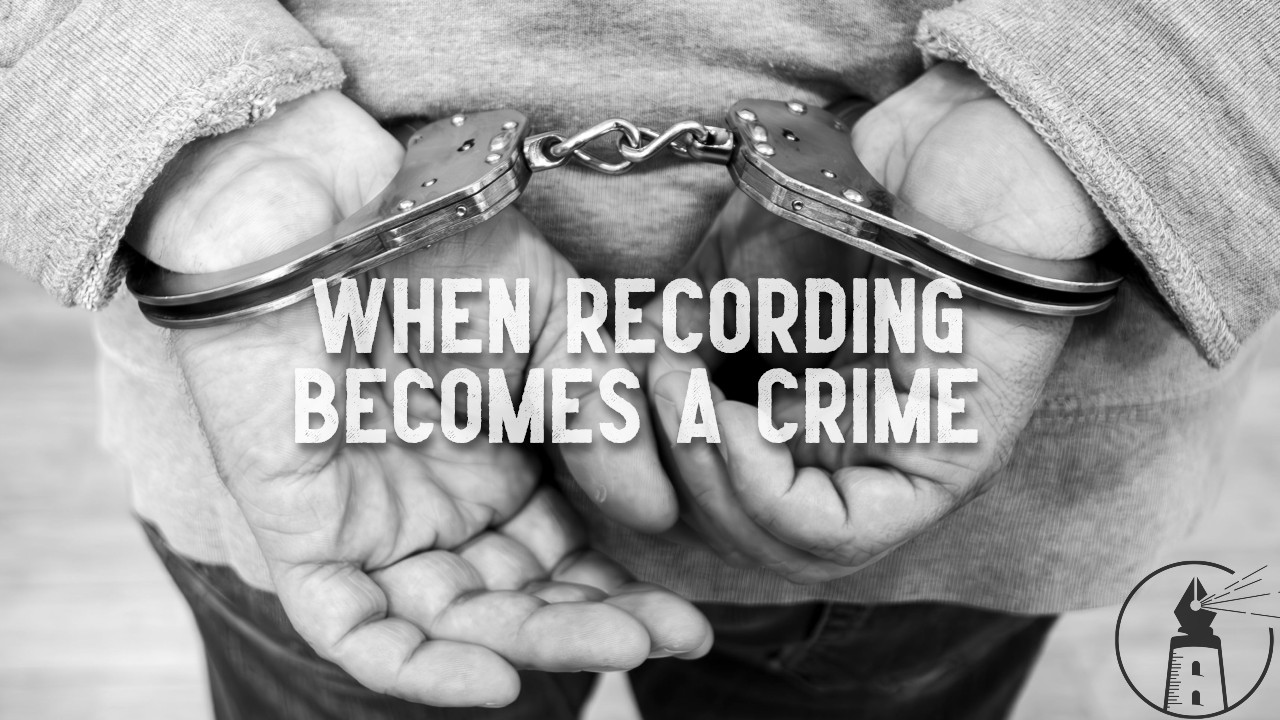
A person standing on a sidewalk with a smartphone can now document events that previously might have gone unnoticed. A traffic stop, a protest, an arrest, or an encounter between law enforcement officers and members of the public can be recorded and shared with the world within minutes.
That ability has transformed public accountability. Videos recorded by ordinary citizens have influenced criminal investigations, civil lawsuits, public debates, and government policies. At the same time, the widespread availability of recording technology has created new challenges for law enforcement officers and other first responders who must manage unpredictable situations while maintaining public safety.
This tension has led several states to adopt or consider laws that create a buffer zone around police officers and other first responders. These laws are sometimes referred to by supporters and critics as “HALO laws,” although they do not all share the same name or language. In general, these statutes establish a minimum distance that individuals must maintain after receiving a lawful order to move back.
Supporters argue that these laws provide necessary protections for officers and emergency personnel performing dangerous duties. Critics argue that overly broad restrictions could interfere with the public’s ability to observe and record government officials carrying out their responsibilities.
At the center of the debate is a fundamental constitutional question: How can governments protect public safety while preserving the First Amendment rights of citizens who document events happening in public?
What Are HALO Laws?
There is no single nationwide HALO law. Instead, the term has become a shorthand description for state laws that establish safety zones around first responders.
Florida’s statute is one example. Florida Statutes Section 843.31 makes it unlawful, after a warning, to knowingly and intentionally approach within 25 feet of a law enforcement officer, firefighter, emergency medical care provider, or other specified first responder who is engaged in official duties under certain circumstances.
The law does not specifically prohibit recording. A person may still be able to observe or record an officer from a lawful distance. Instead, the statute focuses on physical proximity and whether an individual has been warned to remain outside the restricted area.
Other states have adopted or considered similar laws, but the details differ. Some apply only to law enforcement officers, while others include firefighters, emergency medical personnel, or other public safety workers. Some require a warning before enforcement, while others contain different requirements.
The differences between these laws matter because courts evaluating constitutional challenges generally examine the exact language of a statute rather than the general idea of a safety buffer.
The First Amendment Protects the Ability to Gather Information
The First Amendment protects freedom of speech and freedom of the press, but courts have long recognized that those protections include more than simply the ability to speak or publish.
The ability to gather information about government activity is an important part of a functioning democracy. Citizens cannot hold public officials accountable if they are prevented from observing what those officials are doing.
The Supreme Court addressed the importance of public access and government transparency in Richmond Newspapers, Inc. v. Virginia. Although that case involved access to criminal trials rather than recording police activity, the Court emphasized that openness in government proceedings serves important democratic purposes.
Lower federal courts have applied these principles to the recording of law enforcement officers. In Glik v. Cunniffe, the First Circuit Court of Appeals held that a private citizen had a First Amendment right to record police officers performing their duties in public. The court noted that recording government officials creates information that can later be shared and discussed as part of public debate.
Other federal appellate courts have reached similar conclusions, recognizing that recording police activity is protected expression when it does not interfere with legitimate law enforcement operations.
Officer Safety Is Also a Constitutional Consideration
Recognizing a right to record does not mean that citizens have unlimited freedom to approach police officers or enter restricted areas.
The government has a legitimate interest in protecting officers, emergency responders, suspects, bystanders, and the public. Law enforcement officers frequently operate in situations involving weapons, physical confrontations, medical emergencies, or rapidly changing circumstances.
The Supreme Court has recognized that governments may impose reasonable restrictions on protected activity when those restrictions serve important interests and are properly designed. In Ward v. Rock Against Racism, the Court established a framework for evaluating content-neutral restrictions on speech and expressive activity.
The legal question surrounding HALO laws is therefore not whether officer safety matters. It clearly does. The question is whether a specific law creates a reasonable safety measure or whether it restricts protected activity more broadly than necessary.
Why Critics Say Buffer Laws Could Affect Transparency
Opponents of some buffer zone laws argue that distance requirements may create practical problems for journalists, legal observers, and ordinary citizens who want to document government activity.
A person recording an event from a safe location may not interfere with an officer’s work, yet a broadly written law could give officers significant discretion to order that person farther away. Critics argue that excessive restrictions could make it more difficult to document conduct that is already occurring in public.
The concern is not that officers should be forced to allow interference or dangerous behavior. The concern is that the public’s ability to observe government officials may depend on whether a law is narrowly written and consistently applied.
Courts reviewing these laws typically examine whether they leave open meaningful opportunities for observation and whether less restrictive alternatives could achieve the same safety goals.
Why Recording Public Officials Matters
The debate over HALO laws exists because technology has changed the relationship between citizens and government.
Before smartphones became common, documenting a police encounter usually required professional equipment and the involvement of a news organization. Today, millions of people carry cameras capable of recording high-quality video and sharing it instantly.
That technology has created a new form of public oversight. Videos captured by bystanders have helped reveal misconduct, supported officers who acted appropriately, and provided evidence in criminal and civil proceedings.
Recording alone does not determine whether someone acted properly. A short video clip may not capture an entire event or provide complete context. However, the ability to create a record of government activity remains an important part of accountability.
The Future of the First Amendment Debate
The debate over HALO laws is unlikely to disappear. As more states consider similar legislation, courts will continue examining how these laws interact with constitutional protections.
Future legal decisions will likely focus on several recurring questions. Are these laws written in a way that protects legitimate safety interests? Do they give officers too much discretion? Do they leave citizens with meaningful opportunities to observe and record public officials?
The answers will help define the relationship between government transparency and public safety in an era when nearly everyone has the ability to document events as they happen.
The challenge is finding a balance between two important principles. First responders must have the ability to perform their duties safely and effectively. Citizens must also retain the ability to observe and document government actions that take place in public.
The outcome of the debate over HALO laws will determine how those two principles coexist in the digital age.
—Greg Collier