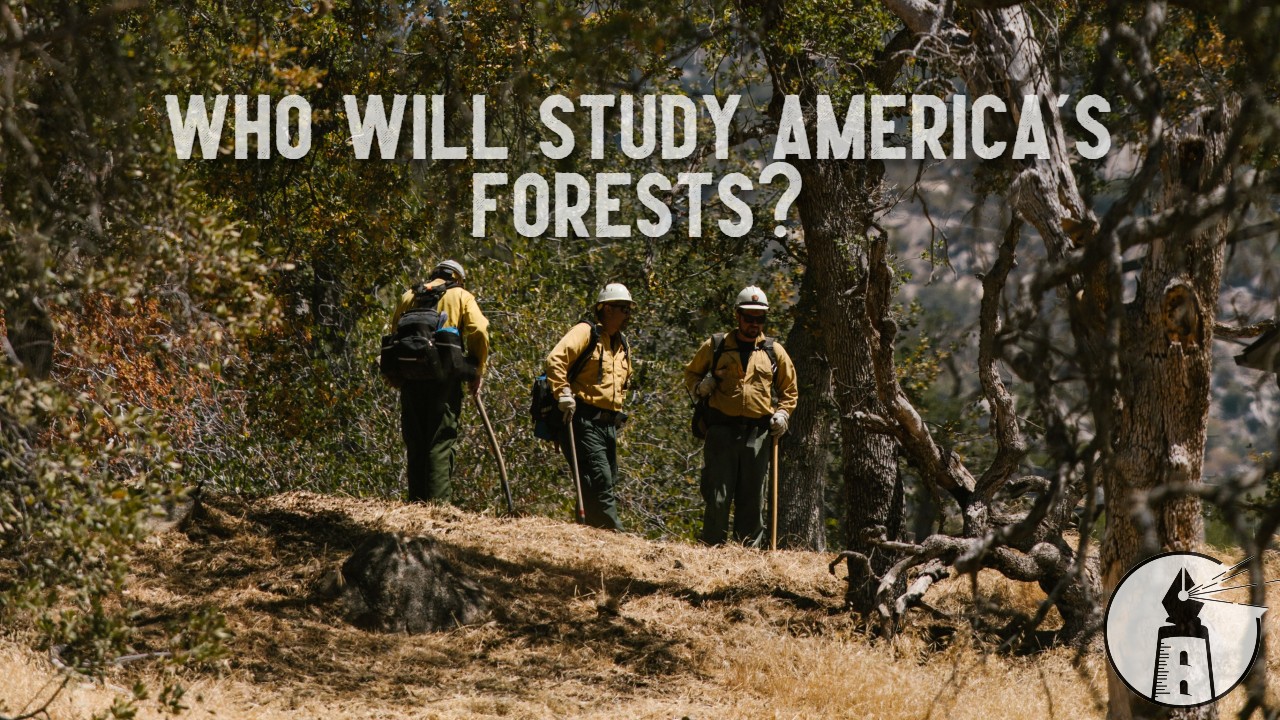
The U.S. Forest Service is closing 23 research and development facilities across more than a dozen states as part of a sweeping reorganization of the agency. The move has received considerably less attention than many of the administration’s other changes to the federal government, but its implications reach far beyond the offices and employees directly affected.
The Forest Service conducts research into some of the most fundamental questions facing America’s forests. Its scientists study wildfires, invasive species, forest diseases, water resources, wildlife, and the ways forests respond to changing environmental conditions.
The agency says the research itself is not being eliminated. Forest Service Associate Chief Chris French told the Associated Press that the work being conducted at the facilities scheduled for closure will continue at other locations. An additional 41 research facilities that had faced possible closure will remain open following concerns raised by local officials, members of Congress, and advocacy groups.
The 23 closures will affect approximately 95 employees, who are expected to be reassigned to other Forest Service locations within their commuting areas. The agency estimates that the closures will save approximately $16 million.
That may sound like a relatively small amount of money in the context of the federal budget. But scientific research is not always something that can be measured simply by the cost of maintaining a building.
A Reorganization With a Larger Goal
The closures are part of a much broader restructuring of the Forest Service.
The agency announced its reorganization as an effort to simplify its organizational structure, strengthen local partnerships, and move decision-making closer to the people and landscapes affected by Forest Service policies. The Forest Service says the changes are intended to make the agency more responsive and efficient.
The restructuring includes moving the Forest Service headquarters from Washington, D.C., to the Salt Lake City area. The agency is also replacing its existing regional structure with a state-based leadership model and creating operations service centers. The Forest Service says these changes are intended to streamline operations and improve mission delivery.
There is nothing inherently unreasonable about a federal agency reviewing its organizational structure. Government programs should be evaluated periodically to determine whether they are accomplishing their missions effectively and whether taxpayers are receiving value for their money.
The challenge is determining how those principles apply to scientific research.
A research facility is not necessarily interchangeable with another office simply because both contain employees doing similar jobs.
Research Depends on Where You Are
Forests are not uniform.
The environmental conditions affecting a forest in Minnesota can be dramatically different from those found in Arizona, Oregon, Alabama, or Virginia. Tree species, soil conditions, precipitation, elevation, insects, diseases, and wildfire behavior all vary from one region to another.
That makes geography an important part of forest research.
Scientists working near a particular ecosystem can develop specialized knowledge about that environment. They can maintain relationships with universities and local governments. They can collect information over long periods of time and observe changes that may not be apparent from a laboratory hundreds of miles away.
The Forest Service’s own Forest Inventory and Analysis program demonstrates the importance of that long-term, geographically distributed approach. The program collects, processes, and analyzes information used to assess the extent and condition of forest resources throughout the United States.
That information is not simply academic. It provides a baseline for understanding how American forests are changing.
When a forest becomes less healthy, researchers need to know what it looked like before the problem appeared. When an invasive species spreads, scientists need information about where it started and how quickly it moved. When a wildfire changes an ecosystem, researchers need historical data to understand the consequences.
Those records cannot be recreated after they have been lost.
Forests Are Part of America’s Water System
One of the most important areas of Forest Service research involves something that most Americans do not associate with forests at all: drinking water.
Forested watersheds provide water for millions of Americans, and the condition of those forests can affect both the quantity and quality of that water.
The Forest Service conducts research examining how forests influence water resources and how disturbances such as wildfire, drought, and changes in land use can affect watersheds. The agency’s Rocky Mountain Research Station, for example, maintains research examining the water supplied by forests and the future risks facing U.S. water resources.
This is particularly important as communities across the country deal with increasingly complicated water challenges.
A wildfire does not necessarily end when the flames disappear. Burned landscapes can experience erosion, changes in water quality, and altered runoff patterns long after a fire has been extinguished.
Research helps communities understand those consequences before they become emergencies.
That is one reason the Forest Service’s research program cannot be viewed solely as an internal government operation. Its findings can be used by water managers, communities, landowners, and other government agencies.
The Wildfire Connection
The importance of forest research is also becoming more apparent as Americans confront destructive wildfires.
Wildfire research involves much more than determining how to put out a fire. Scientists study how forests respond to drought, how vegetation changes after a fire, how different forest management practices affect fire behavior, and how ecosystems recover afterward.
Those questions often require years of observation.
The Forest Service has maintained long-running research programs that have produced information useful far beyond the original study area. Its research at Mount St. Helens, for example, has continued for more than four decades following the 1980 volcanic eruption. The agency describes the area as a living laboratory for studying how ecosystems respond to major disturbances.
That kind of research illustrates why scientific infrastructure can be difficult to replace.
A study that lasts decades creates a record that becomes more valuable as time passes. Closing or relocating the facility responsible for maintaining that work may not necessarily end the research, but maintaining continuity becomes more complicated.
Closing Facilities Does Not Mean Ending the Science
The Forest Service is making an important distinction that should be recognized.
The agency says it is not ending the ongoing scientific activities conducted at the facilities being closed. Instead, those activities will be moved to other locations.
That means the closures should not automatically be described as the elimination of forest research.
However, moving research programs can still create challenges.
Researchers may have spent years developing relationships with universities, state agencies, and local communities. Equipment may have been specifically designed for a particular facility. Field studies may depend on access to nearby forests. Employees may possess specialized knowledge that is difficult to transfer.
There is also the broader question of staffing.
The Associated Press reports that the Forest Service has lost approximately 6,000 employees, or about 15% of its workforce, during the Trump administration’s second term. The research facility closures are therefore occurring within a larger reduction and restructuring of the agency.
That context matters because a research program’s effectiveness depends on more than whether a particular office remains open.
It depends on whether enough scientists, technicians, and support personnel remain available to conduct the work.
The Cost of Knowing Less
The most difficult thing about evaluating cuts to scientific research is that the consequences may not be immediately visible.
A research program reduced today may not produce an obvious problem next year.
Forests operate on much longer timelines.
An invasive insect can take years to spread. A tree disease can move gradually across a region. Changes in rainfall and temperature can alter ecosystems over decades. A wildfire can transform a landscape in a matter of days, while its ecological effects continue for generations.
Researchers need long-term information to understand those changes.
That is why scientific research sometimes has value even when there is no immediate crisis.
The information collected today may become essential years from now when a previously minor problem becomes a major one.
In that sense, research is partly an investment in the country’s ability to recognize problems before they become emergencies.
Efficiency Should Not Become the Only Measure
The Forest Service has a legitimate responsibility to examine its facilities and determine whether taxpayer dollars are being spent efficiently.
The agency also has a legitimate argument that some research activities can be consolidated without ending the underlying science.
But efficiency should not become the only measure of a scientific institution’s value.
The cost of maintaining a research facility can be calculated. The cost of losing decades of institutional knowledge is much harder to quantify.
The same is true of long-term datasets, research partnerships, and the ability to maintain scientists close to the ecosystems they study.
The Forest Service says the science will continue.
The important question now is whether it will continue with the same geographic reach, institutional knowledge, and long-term capacity.
That deserves considerably more attention than the $16 million in estimated savings might suggest.
America’s forests will continue to change regardless of how the Forest Service is organized. Wildfires will continue to occur. Invasive species will continue to spread. Forest diseases will continue to emerge. Communities will continue to depend on watersheds.
The country will need scientists capable of understanding those changes.
Saving money today is easy to measure.
The cost of knowing less tomorrow is not.
—Greg Collier