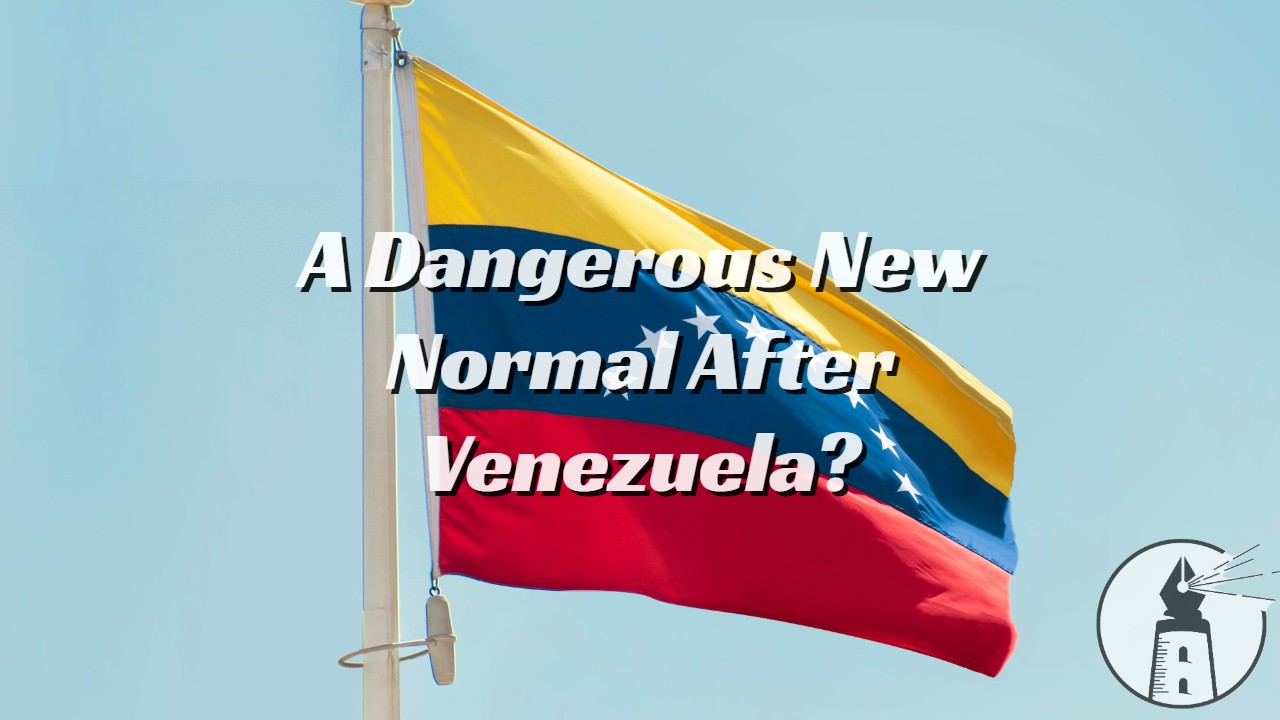
The Trump administration’s decision to authorize a military strike on Venezuela and capture President Nicolás Maduro and his wife, Cilia Flores, has rapidly become one of the most consequential and controversial actions in recent U.S. foreign policy. In the early hours of January 3, 2026, U.S. forces conducted a military operation in Caracas that resulted in Maduro and Flores being taken into custody and transported to New York to face federal charges, including narco-terrorism and drug trafficking allegations. Both have pleaded not guilty in U.S. court.
No one disputes that Maduro’s government has been authoritarian and responsible for grave human suffering in Venezuela. Yet the manner in which the United States seized Venezuela’s head of state, by unilateral military action, raises profound questions about international norms, sovereign independence, and U.S. constitutional processes.
Executive Action Without Congressional Consultation
A particularly striking aspect of this operation is that it appears to have been ordered without prior consultation with Congress. Unlike some past military actions where congressional leaders were briefed in advance, lawmakers, including members of both parties, say they were kept in the dark until after the mission was already underway or completed. Critics contend this bypasses the War Powers Resolution and the constitutional balance between the executive and legislative branches.
While the administration has defended its actions as necessary and justified under the president’s constitutional authority, this raises enduring questions about executive power and legislative oversight in decisions that involve the use of U.S. military force abroad.
Sovereignty and the Rule of Law
Under international law, the use of force against another sovereign state is tightly constrained. The United Nations Charter generally prohibits intervention in the internal affairs of another country except in narrowly defined cases such as self-defense or with Security Council authorization. Many legal experts and dozens of foreign governments have characterized the U.S. strike and capture as a violation of these norms.
This is not a trivial legal dispute. When a powerful nation unilaterally uses military force to seize the leader of another state, it inevitably raises the question: who is next? If such an action becomes normalized, it could lower the threshold of acceptable conduct among major powers. What would prevent Russia from abducting Ukraine’s president during wartime? Or China from seizing Taiwan’s leadership amid cross-strait tensions? These are not hypothetical scenarios; they are the very dilemmas global leaders must now confront.
Mixed Signals in Global Context
Rather than assuaging these concerns, statements by U.S. officials have at times muddied the legal and strategic rationale. President Trump has publicly suggested that the United States might “run” Venezuela until a transition is executed and has explicitly linked the operation to oil infrastructure and economic interests, highlighting potential involvement of U.S. energy companies. This has fueled skepticism in many capitals that the operation was motivated by geopolitical and resource interests instead of strictly legal or humanitarian imperatives.
Financial markets responded quickly, with U.S. energy and defense stocks rising as investors speculated about access to Venezuela’s vast crude reserves and heightened geopolitical demand for security firms. Yet oil prices globally have seen only modest moves, in part because Venezuela’s current production contributes a small percentage of global supply despite holding some of the largest proven reserves.
Media and Public Discourse: A Troubling Dynamic
As this crisis unfolds, early media coverage in the United States has focused heavily on dramatic visuals and celebratory scenes among segments of the Venezuelan diaspora. While human-interest elements are compelling, they can overshadow deeper analysis. In the context of this operation, two of the country’s most influential news outlets, The New York Times and The Washington Post, reportedly knew in advance about the planned raid but chose not to publish prior to its execution, citing alleged security concerns that disclosure could endanger U.S. forces.
This decision, and the debates surrounding it, raises uncomfortable questions about the role of the press in a democratic society: Is that what journalism has come to, or are news organizations increasingly cautious because of potential repercussions from the White House or other powerful actors? Many Americans once took pride in a free and independent press; in moments like this, that ideal is being tested.
What Is Journalism’s Role?
There is a longstanding practice in U.S. national security reporting of delaying publication of sensitive information when officials argue that doing so could put lives at risk. Yet this tradition sits uneasily with the public’s right to know about decisions of enormous national and global consequence. When outlets voluntarily withhold coverage of military actions, it can leave citizens unaware of major policy shifts until after the fact.
It is therefore worth asking not only what was done in Venezuela, but how information about it was managed. A robust media discourse would explore the constitutional and international legal dimensions of the operation, rather than centering almost exclusively on its dramatic visuals or partisan reactions.
Policy Alternatives and Strategic Implications
If the objective was truly to address drug trafficking or criminal charges against Maduro, critics note that other countries with larger drug production, such as Colombia, could theoretically have been part of a broader strategy. Using military force to remove a head of state is an extreme step with consequences that extend far beyond any one indictment.
Moreover, this operation, intentional or not, shifts the global conversation away from multilateral cooperation toward a model in which powerful nations act unilaterally. That carries risks not only for diplomatic relations but also for the stability of the very international order that supports peace and economic prosperity.
Conclusion
There is no question that Nicolás Maduro’s regime has been deeply flawed and has inflicted suffering on his own people. Yet the United States’ approach, a military raid on a sovereign nation that resulted in the capture and forcible removal of its president, sets a fraught precedent at a time when global norms regarding sovereignty and the use of force are under intense strain.
A thoughtful, comprehensive media discourse, one that interrogates why major outlets withheld reporting, how constitutional authority was exercised, and what this means for the future of international law and great power behavior, is essential. Policymakers, journalists, and the public alike should consider not just what was done, but what it means for the future of diplomacy, democratic oversight, and the credibility of international institutions.
—Greg Collier