At the turn of the 21st century, many American workers still operated within a system shaped by decades of labor organizing, regulatory expansion, and employer-provided stability. That system was imperfect, but it provided a degree of predictability through union representation, employer-sponsored benefits, and enforceable workplace protections.
Over the past twenty-five years, that framework has steadily weakened. The erosion has not come from a single policy decision but from a convergence of economic shifts, legal changes, and evolving labor practices. The result is a workforce that carries more risk, receives fewer guarantees, and has less leverage than it did at the beginning of the century.
The Decline of Collective Bargaining Power
Few trends better illustrate this shift than the decline of organized labor. According to the U.S. Bureau of Labor Statistics, union membership stood at just 10 percent of wage and salary workers in 2025, roughly half of what it was in the early 1980s.
This decline has real consequences. Research from the U.S. Treasury Department notes that as union membership has fallen over time, income inequality has risen in parallel, with the top 1 percent now capturing a significantly larger share of total income.
Unions historically provided workers with collective bargaining power that translated into higher wages, stronger benefits, and safer working conditions. Their decline has weakened that negotiating position not only for union members but across the broader labor market. Even nonunion workers often benefited from the standards unions helped establish, a spillover effect that has diminished as union density has fallen.
The Rise of Precarious Employment
While unions have declined, the structure of employment has shifted. The early 2000s marked the acceleration of nontraditional work arrangements, including contract work, temporary staffing, and gig-based labor.
These arrangements offer flexibility, but they often exclude workers from fundamental protections. Independent contractors are typically not covered by minimum wage laws, overtime rules, unemployment insurance, or employer-sponsored health benefits. This reclassification has allowed companies to reduce costs while shifting financial risk onto workers.
The broader consequence is a labor market defined less by long-term employment relationships and more by short-term transactions. Workers are expected to absorb fluctuations in income, manage their own benefits, and navigate an increasingly fragmented employment landscape.
The Transformation of Workplace Benefits
The erosion of workers’ rights is also evident in the changing nature of benefits. Employer-sponsored pensions have largely been replaced by defined contribution plans such as 401(k)s, transferring the responsibility for retirement savings from employers to employees.
This shift introduces uncertainty. Retirement outcomes now depend on individual savings behavior and market performance rather than guaranteed benefits. For many workers, especially those with inconsistent income, this creates significant long-term financial risk.
Health insurance has followed a similar trajectory. While employer-sponsored coverage remains common, rising deductibles and premiums have increased out-of-pocket costs. In sectors dominated by contract or part-time work, employer-provided health insurance is often unavailable altogether.
These changes reflect a broader trend in which employers have reduced their long-term obligations, leaving workers to shoulder a greater share of economic uncertainty.
The Role of Right-to-Work Laws
One of the most consequential policy developments affecting workers’ rights has been the expansion of right-to-work laws. These laws prohibit agreements that require workers to pay union dues as a condition of employment, even when unions are responsible for negotiating contracts that benefit all employees.
Supporters argue that such laws promote individual choice and attract business investment. Critics argue that they weaken unions by reducing their financial resources while still requiring them to represent all workers.
Empirical research suggests these laws have measurable effects. A study summarized by the National Bureau of Economic Research found that right-to-work laws are associated with a drop in unionization rates of about 4 percentage points and a decline in wages, particularly in heavily unionized industries.
Additional research indicates that these laws reduce workers’ bargaining power, leading to slower wage growth and broader shifts in corporate behavior, including higher profits and increased executive compensation.
In practical terms, workers in right-to-work states often earn less on average and are less likely to have access to employer-sponsored benefits. The laws have become a central factor in the geographic divide in labor conditions across the United States.
Globalization and Competitive Pressure
Globalization has also reshaped the balance of power between workers and employers. Advances in technology and trade have enabled companies to move production across borders, increasing competition for labor and placing downward pressure on wages in certain sectors.
Manufacturing has been particularly affected, with many workers facing job displacement or reduced bargaining power. Even in industries less directly exposed to global competition, the perception of outsourcing has influenced employer strategies, reinforcing a focus on cost control and labor flexibility.
While globalization has contributed to economic growth and lower consumer prices, its benefits have not been evenly distributed. Many workers have experienced greater instability without corresponding gains in income or security.
Legal and Institutional Changes
Changes in labor law and enforcement have further contributed to the erosion of workers’ rights. Court decisions have expanded the use of mandatory arbitration agreements, limiting workers’ ability to pursue collective legal action against employers.
At the same time, enforcement of existing labor standards has been inconsistent. Resource constraints and shifting political priorities have affected the capacity of regulatory agencies to investigate violations and enforce protections.
These developments have created an environment in which formal rights may exist on paper but are more difficult to exercise in practice.
The Broader Economic Impact
The decline of workers’ rights has implications that extend beyond individual workplaces. Research has linked falling union membership to rising income inequality, with union decline accounting for a measurable share of the increasing concentration of income among top earners.
When workers have less bargaining power, a smaller share of economic growth is reflected in wages. This dynamic contributes to broader inequality and affects overall economic stability. Consumer spending, which drives much of the U.S. economy, becomes more volatile when workers face financial insecurity.
The reduction in employer-sponsored benefits also places additional strain on public systems. Programs such as Social Security and Medicare become more critical as workers lose access to private retirement and healthcare support.
Looking Ahead
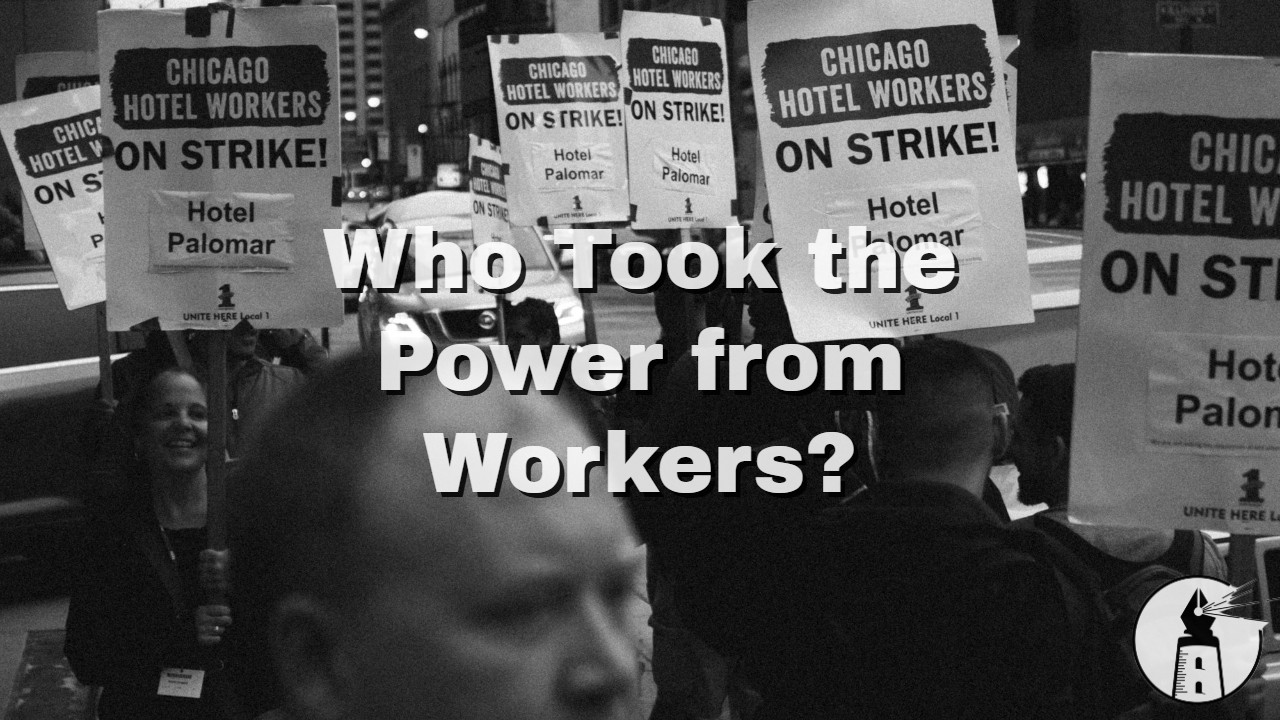
Despite these challenges, the trajectory is not fixed. Recent years have seen renewed interest in labor organizing, particularly in industries that were once considered difficult to unionize. Public support for unions has also increased, even as structural barriers remain.
The future of workers’ rights in the United States will depend on how policymakers, businesses, and workers respond to these evolving conditions. Questions surrounding worker classification, collective bargaining rights, and benefit structures remain central to the broader debate.
Understanding the erosion of workers’ rights since the turn of the century is not simply an academic exercise. It is a necessary step in evaluating the kind of labor market the country wants to sustain. The choices made now will determine whether the current trend toward precarity continues or whether a new equilibrium emerges that restores a measure of stability and balance for American workers.
—Greg Collier