The aftermath of high-profile acts of violence often reveals as much about political priorities as it does about public safety. In the wake of the recent shooting incident connected to the White House Correspondents’ Dinner, Donald Trump has pointed to the episode as justification for a long-standing idea: the construction of a White House ballroom. Framed as a matter of security and control, the proposal has been revived at a moment when the broader issue of gun violence in the United States continues to affect communities far beyond Washington.
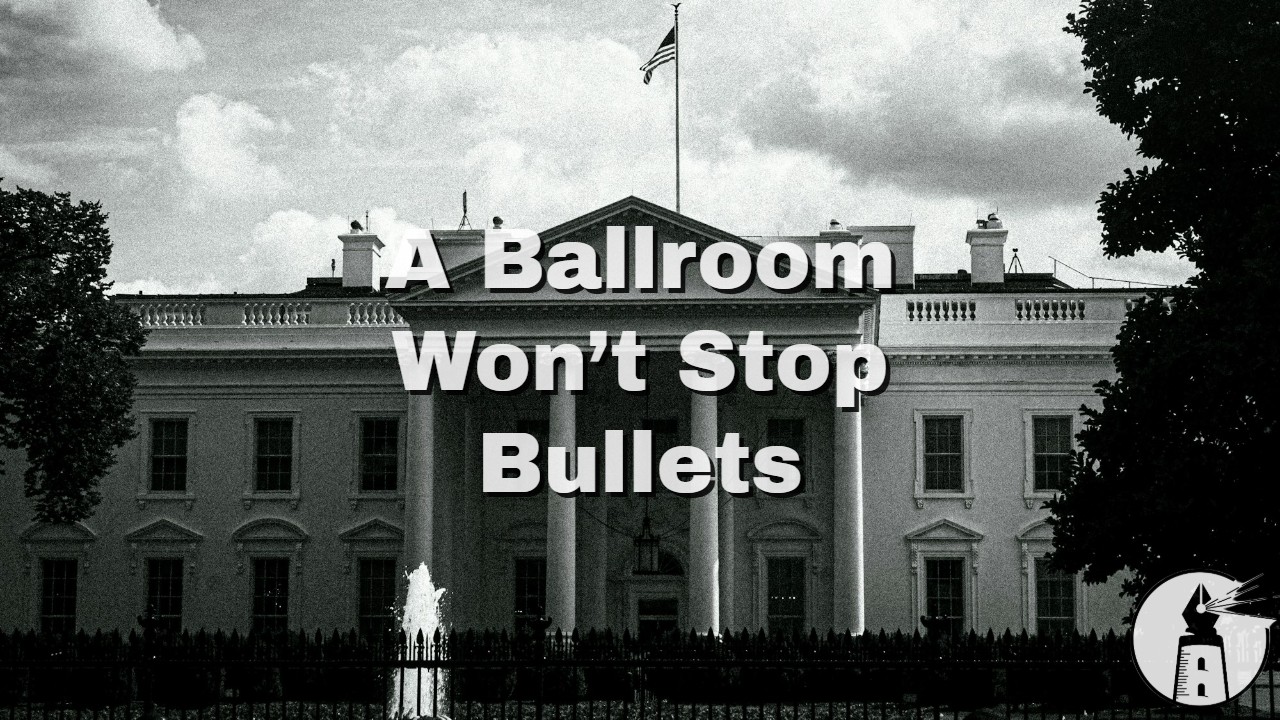
According to reports, Trump has argued that holding large-scale events like the Correspondents’ Dinner off-site introduces unnecessary risk and that a dedicated ballroom within the White House complex would provide a more secure, controlled environment.
That argument is not new. Trump has previously floated the ballroom idea dating back to his first term, often describing it as a privately funded addition that would modernize the White House’s capacity to host large events. What is new is the context in which the argument is being made. By tying the proposal to a recent act of violence, the framing shifts from convenience or prestige to security necessity.
Security Framing and Political Messaging
The White House Correspondents’ Dinner has long been held at venues outside the White House, most commonly large hotels in Washington, D.C., precisely because of space limitations. Security for the event already involves coordination between multiple agencies, including the United States Secret Service, local law enforcement, and federal partners.
Publicly available descriptions of White House security protocols emphasize layered defenses, controlled perimeters, and advance screening for major events.
By invoking the recent shooting, Trump’s argument suggests that even these existing measures are insufficient when events are held off White House grounds. A ballroom inside the complex, in this framing, would allow for tighter control over access points and eliminate some external variables.
Yet this line of reasoning raises a broader question. If the concern is the risk posed by firearms at public gatherings, why is the proposed solution limited to relocating elite events into more secure spaces rather than addressing the availability and use of those firearms in the first place?
A Longstanding National Issue
Gun violence in the United States is not confined to high-profile political events. Data from the Centers for Disease Control and Prevention consistently shows that firearm-related deaths remain a leading cause of injury-related death nationwide, affecting urban, suburban, and rural communities alike.
Mass shootings, while drawing significant media attention, represent only one part of a broader pattern that includes homicides, suicides, and accidental shootings. These incidents occur in schools, workplaces, homes, and public spaces across the country.
The contrast is difficult to ignore. The same type of violence that prompts calls for increased security at a high-profile dinner is part of daily life for many Americans, yet the policy responses often differ dramatically depending on who is affected and where the incident occurs.
Selective Responses to Risk
Political responses to violence often reflect immediate circumstances rather than consistent policy frameworks. In this case, the proposed solution is architectural. A ballroom becomes a symbol of control, a way to bring an unpredictable external environment into a managed internal space.
This approach has precedent. Governments frequently respond to security concerns by hardening specific targets, increasing surveillance, or restricting access to sensitive areas. These measures can be effective in protecting those particular spaces.
However, they do little to address the underlying conditions that produce the threat. In the context of gun violence, those conditions include access to firearms, gaps in enforcement, and broader social factors that contribute to violent behavior.
Research and reporting from organizations such as The New York Times and The Washington Post have repeatedly highlighted how policy debates around firearms often stall at the national level, even as incidents continue to accumulate.
Against that backdrop, focusing on a ballroom as a security solution can appear narrow in scope. It addresses a specific vulnerability tied to a specific event, but it does not engage with the broader issue.
Symbolism and Public Perception
The White House itself carries symbolic weight. Changes to its structure, especially those justified on security grounds, can signal broader priorities. A ballroom framed as a response to violence suggests a focus on protecting the institution and those who operate within it.
For critics, that symbolism may reinforce a perception that political leaders are more responsive to threats that affect them directly than to those that impact the general public. For supporters, the proposal may be seen as a practical step to reduce risk in a high-profile setting.
Both interpretations coexist, shaped by political affiliation and broader views on governance. What remains consistent is the gap between targeted security measures and comprehensive policy solutions.
The Limits of Physical Security
Security experts often note that no system can eliminate risk entirely. Even heavily fortified locations remain vulnerable to certain types of threats, particularly those that originate from individuals with access or proximity.
The Secret Service and other agencies continuously adapt their strategies based on evolving threats, but those strategies are designed to protect specific people and places. They are not substitutes for broader public safety policies.
In that sense, a White House ballroom, even if built, would function as one more layer in a complex security environment. It might reduce certain risks associated with off-site events, but it would not change the underlying dynamics of gun violence in the United States.
Broader Policy Questions
The debate sparked by the recent incident ultimately points to larger questions about how the country addresses violence. Should responses focus on protecting high-value targets, or should they aim to reduce the prevalence of violence more generally?
Public opinion on gun policy remains divided, as shown in surveys conducted by organizations like the Pew Research Center, which document ongoing disagreements over regulation, enforcement, and individual rights.
These divisions make comprehensive solutions difficult to achieve. In the absence of consensus, policymakers often default to more limited measures that can be implemented without broad legislative change.
A ballroom proposal fits that pattern. It is a tangible, discrete project that can be framed as enhancing security without requiring a broader policy shift. Whether it meaningfully addresses the concerns raised by the recent shooting is a separate question.
Continuity in Crisis Response
The pattern of responding to specific incidents with targeted solutions is not unique to this moment. It has been observed in previous administrations and across different policy areas. High-profile events generate immediate attention and pressure to act, leading to proposals that address the most visible aspects of the problem.
Over time, those proposals can become part of a larger patchwork of responses, each addressing a particular scenario but leaving systemic issues unresolved.
The current discussion around a White House ballroom reflects that continuity. It is a response shaped by a specific incident, framed through a particular lens, and situated within a broader landscape of ongoing debate.
Final Thoughts
The recent shooting connected to the White House Correspondents’ Dinner has once again brought questions of security and public safety to the forefront. Donald Trump’s renewed push for a White House ballroom highlights one way in which those questions are being answered.
By focusing on the security of a single event and a specific location, the proposal offers a narrow solution to a broader problem. It underscores the difference between protecting institutions and addressing the conditions that give rise to violence in the first place.
For many Americans, the risks associated with gun violence are not limited to high-profile gatherings. They are part of everyday life. The challenge for policymakers is whether to respond to those risks with targeted measures that protect the few or with broader efforts that aim to reduce harm for the many.
—Greg Collier