For most of human history, the rhythm of daily life was defined by the rising and setting of the sun. Darkness was not merely the absence of light but an environmental signal that shaped sleep, metabolism, and hormonal cycles. In the modern world, however, artificial illumination has radically altered that ancient relationship. Streets glow throughout the night, office buildings remain lit long after workers leave, and personal screens emit bright light into bedrooms at all hours.
This transformation has created what scientists now call artificial light at night, commonly abbreviated as ALAN. While artificial lighting has brought enormous social and economic benefits, a growing body of scientific research suggests that excessive nighttime illumination is interfering with fundamental biological processes. The human body evolved to follow natural cycles of daylight and darkness, and when those cycles are disrupted, health consequences can follow.
Recent research in chronobiology, neuroscience, and endocrinology increasingly indicates that light pollution is not simply an environmental nuisance. It may be altering the timing systems embedded within the human body itself.
The Circadian Clock and the Role of Darkness
Human biology is regulated by a roughly twenty-four-hour cycle known as the circadian rhythm. This internal clock governs sleep and wake patterns, hormone production, body temperature, metabolism, and even aspects of immune function. The circadian system relies heavily on environmental cues, particularly light.
Specialized cells in the retina detect ambient light and transmit signals to a region of the brain called the suprachiasmatic nucleus, which serves as the body’s master clock. When daylight reaches the eyes in the morning, it helps reset this clock, signaling that the active phase of the day has begun. Conversely, darkness signals the body to transition toward rest and recovery.
One of the most important biological signals associated with darkness is the hormone melatonin. Produced by the pineal gland, melatonin rises in the evening as natural light fades and helps prepare the body for sleep. Artificial light at night can interfere with this process by suppressing melatonin production. Researchers have documented that exposure to electrical lighting between dusk and bedtime can significantly reduce melatonin levels and shorten the duration of its nightly release.
The sensitivity of this system is remarkable. Even relatively low levels of illumination can alter the body’s perception of night. Studies have shown that modest indoor lighting before bedtime can delay melatonin onset in nearly all individuals and shorten its duration by about ninety minutes.
The Expansion of Artificial Light
Artificial lighting has expanded dramatically over the past century. Electric lighting first spread widely during the late nineteenth and early twentieth centuries, but the scale of illumination increased exponentially with the development of inexpensive outdoor lighting, neon signage, and later LED technology.
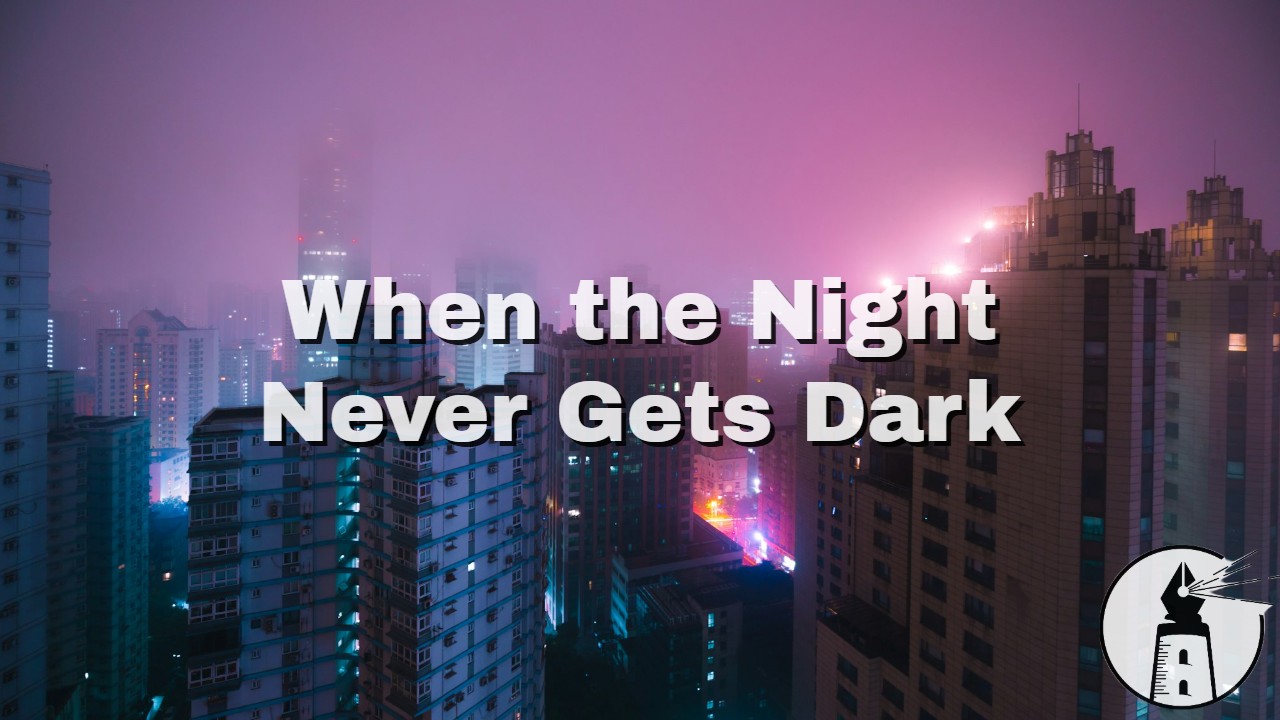
Satellite imagery shows that the Earth’s nighttime brightness continues to increase each year. Urban areas are often so brightly illuminated that the night sky itself becomes washed out by a phenomenon known as skyglow. In large cities, residents may never experience true darkness.
The growth of artificial light has also extended beyond outdoor infrastructure. Digital screens have become ubiquitous sources of light exposure, particularly during evening hours. Smartphones, tablets, and computer monitors emit blue wavelength light that is especially effective at stimulating the retinal cells that regulate circadian rhythms.
Scientific reviews of artificial light at night have concluded that increasing exposure to nighttime illumination is capable of disturbing the timing of biological systems that evolved under natural light cycles.
Blue Light and Biological Sensitivity
Not all light affects human physiology in the same way. Research over the past two decades has identified specific wavelengths that are particularly influential in regulating circadian rhythms. Blue wavelength light, typically in the range of roughly 440 to 495 nanometers, strongly stimulates retinal photoreceptors that communicate with the brain’s circadian control center.
Because many modern LEDs and digital displays produce significant amounts of blue light, nighttime exposure to these sources can have a pronounced effect on biological timing systems. Experimental studies have demonstrated that exposure to blue-enriched light in the evening can suppress melatonin and delay circadian rhythms, making it more difficult for individuals to fall asleep.
Even dim light may have measurable effects. Research summarized by Harvard Health indicates that illumination as low as eight lux, brighter than many nightlights, can interfere with melatonin secretion and disrupt circadian rhythms.
This sensitivity reflects the evolutionary history of human biology. For hundreds of thousands of years, nighttime environments were illuminated only by moonlight, starlight, and occasional fire. Artificial lighting introduces brightness levels that far exceed those natural conditions.
Health Consequences of Circadian Disruption
Circadian rhythms regulate a wide array of physiological functions, so disturbances in these rhythms can influence many aspects of health. Research has linked exposure to artificial light at night with sleep disturbances, metabolic disorders, cardiovascular issues, and mental health problems.
A widely cited review of the health effects of artificial nighttime light found that exposure to bright light at night can delay sleep onset, increase alertness when the body should be preparing for rest, and disrupt the coordination of circadian systems throughout the body.
Sleep disruption is often the most immediate effect. When melatonin release is delayed or suppressed, individuals may struggle to fall asleep or experience fragmented sleep throughout the night. Over time, chronic sleep deprivation can contribute to broader health problems.
Epidemiological studies have also suggested associations between nighttime light exposure and metabolic disorders. Research involving large population samples has found that individuals exposed to higher levels of nighttime light may face increased risks of developing type two diabetes, even after accounting for lifestyle and health variables.
Scientists have also explored potential links between circadian disruption and cancer risk. Melatonin is believed to have protective properties related to cell growth and immune regulation. When nighttime light suppresses melatonin production, it may alter hormonal pathways that influence tumor development, although the precise mechanisms remain under investigation.
Mental health may also be affected. Reviews of the scientific literature suggest that reduced melatonin and disrupted circadian rhythms can influence mood regulation and may contribute to conditions such as depression.
Shift Work and Artificial Night
One of the clearest examples of circadian disruption comes from night shift work. Individuals who work overnight schedules experience chronic exposure to artificial light during biological night while attempting to sleep during daylight hours.
The International Agency for Research on Cancer has classified shift work that disrupts circadian rhythms as a probable carcinogen, reflecting concerns about long-term health impacts. Studies of shift workers have documented elevated risks of certain cancers as well as metabolic disorders and cardiovascular disease.
Shift work demonstrates how strongly human biology depends on synchronized environmental cues. When individuals live according to a schedule that conflicts with natural light cycles, the body’s internal clocks may fall out of alignment with each other.
The Brain and the Nighttime Environment
The effects of light pollution extend beyond sleep. Emerging research suggests that nighttime illumination may influence brain function and cognitive health. Some studies have explored correlations between high levels of nighttime light exposure and increased prevalence of neurological conditions such as Alzheimer’s disease, although further research is needed to clarify causal mechanisms.
One possible explanation involves the role of sleep in brain maintenance. During deep sleep, the brain activates systems that help clear metabolic waste products. If artificial light disrupts sleep cycles, these restorative processes may be impaired.
Circadian rhythms also regulate the release of hormones such as cortisol and insulin, meaning that disruptions may cascade through multiple physiological systems. As research into chronobiology expands, scientists are beginning to understand how deeply embedded these timing systems are within human health.
Reconsidering the Night
The expansion of artificial lighting has reshaped the human relationship with darkness. For many people living in modern cities, true nighttime darkness has effectively disappeared. Yet growing scientific evidence suggests that darkness itself plays an essential role in maintaining biological balance.
Researchers emphasize that artificial lighting is not inherently harmful. Properly timed light exposure can improve alertness, productivity, and safety. Morning daylight is one of the most powerful signals for maintaining healthy circadian rhythms.
The challenge lies in the timing and intensity of nighttime illumination. When bright light is introduced during hours that were historically dark, the body may struggle to interpret environmental signals correctly.
Scientists increasingly argue that preserving natural cycles of light and darkness is important not only for ecological reasons but also for human health. The circadian system evolved under predictable environmental rhythms, and maintaining those rhythms may be critical for long-term biological stability.
Conclusion
Light pollution represents one of the most widespread yet often overlooked environmental changes of the modern era. Artificial illumination has transformed cities, industries, and daily life, enabling human activity to continue long after sunset. At the same time, the growing scientific literature indicates that this technological success carries biological consequences.
Human physiology evolved in a world defined by bright days and dark nights. When artificial light erases that boundary, the body’s internal clocks may drift out of alignment. Melatonin suppression, sleep disruption, metabolic changes, and potential long-term health effects all illustrate how sensitive the circadian system is to light.
The emerging field of chronobiology is revealing just how deeply light influences human biology. As research continues, scientists are increasingly recognizing that darkness is not simply a void to be filled with illumination. It is a biological signal that the human body still depends on.
Understanding that relationship may ultimately shape how societies design lighting, regulate nighttime environments, and rethink the role of darkness in modern life.
—Greg Collier