Yesterday, the U.S. Court of Appeals for the Eighth Circuit issued a brief, unsigned order temporarily blocking (staying) a federal judge’s restrictions on immigration agents’ tactics during Minnesota protests. Restrictions that were meant to protect people engaged in peaceful, constitutionally protected protest.
What the district judge had ordered and why
Last week, U.S. District Judge Kate Menendez issued a preliminary injunction after protesters sued, arguing that federal agents’ tactics were chilling First Amendment activity. Reuters reports her order temporarily restricted agents from deploying tear gas and other force against non-violent demonstrators and observers while the case proceeds.
Whatever you think of protest politics, the premise here is basic: the government does not get to punish people for speaking, assembling, filming, chanting, or standing there, so long as they’re not obstructing or assaulting anyone. Courts are supposed to treat that as foundational.
What the Eighth Circuit did
The Eighth Circuit stayed Menendez’s injunction, meaning the protections she put in place are effectively turned off for now while the appeal continues. Reuters notes the order was brief and unsigned, and it paused the injunction while the court considers whether to extend that pause for the length of the appeal.
That is not a technical housekeeping move. In real life, a “stay” is the difference between people being able to protest without being met with chemical agents and the government being allowed to revert to tactics a district judge found serious enough to restrain in the first place.
Why this is a First Amendment problem
If a court finds that official conduct is chilling speech and assembly, pausing the remedy should require real caution because the harm (suppressed speech) isn’t easily “made whole” later. The whole point of preliminary relief is to prevent ongoing constitutional injury while litigation plays out.
Yet the Eighth Circuit’s action of lifting restraints on force against peaceful protesters signals something else. The First Amendment becomes negotiable the moment federal enforcement agencies claim operational convenience.
The “secret police” feel is not an accident
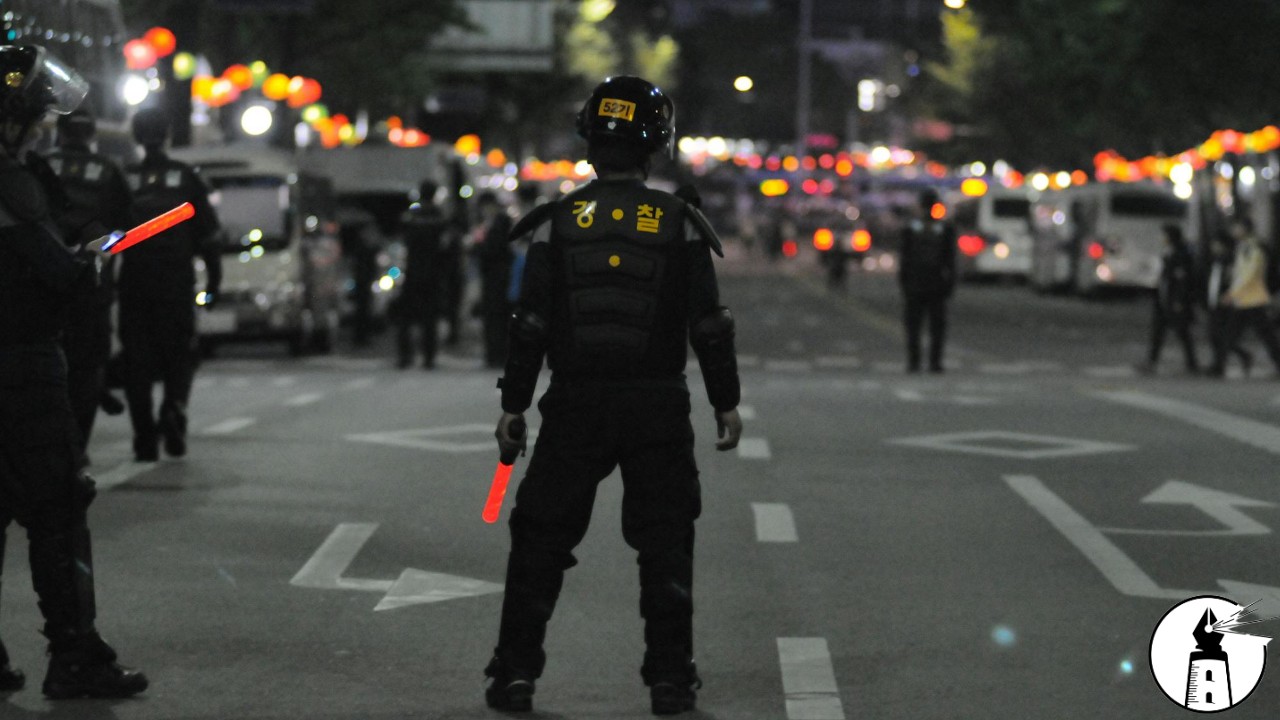
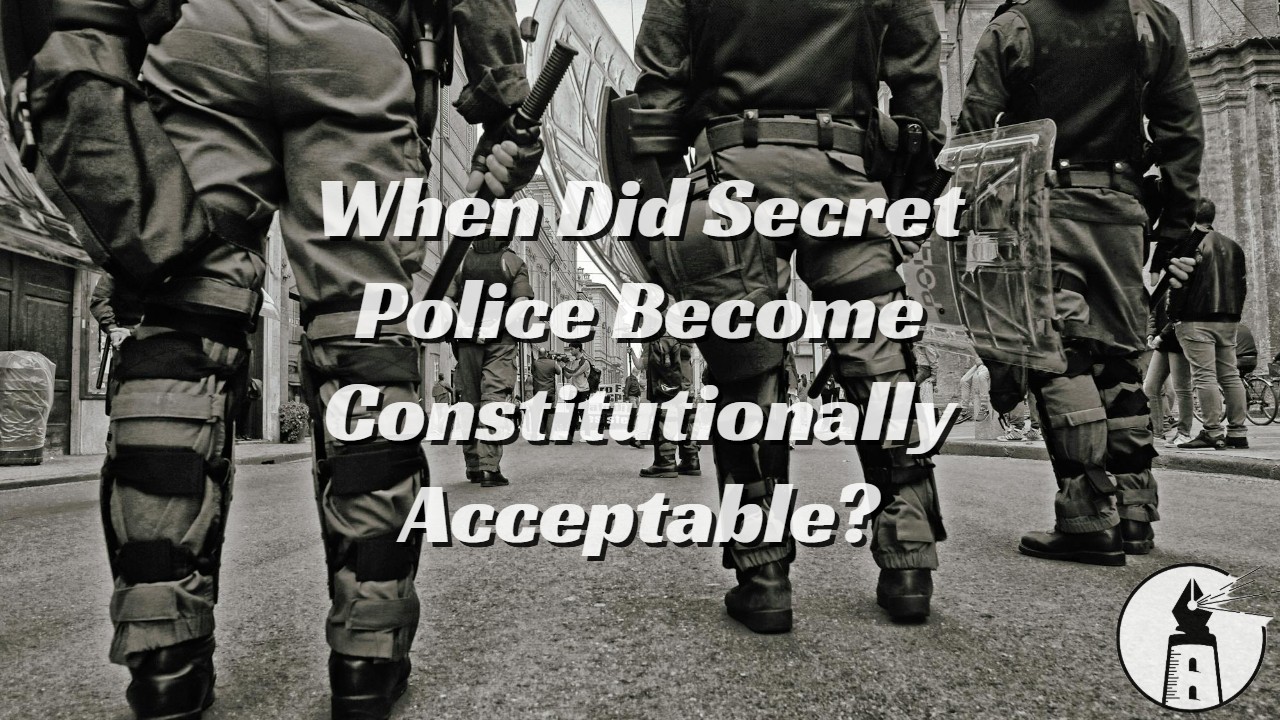
Again, Reuters describes agents “carrying rifles,” wearing “military-style camouflage,” “tactical gear,” and “face masks,” using chemical irritants, and demanding ID from U.S. citizens.
Call them what you want: federal agents, ICE, CBP, or DHS teams, but when armed personnel show up masked, in tactical gear, dispersing crowds and escalating encounters with civilians, the public isn’t irrational for hearing the phrase “secret police.” And when an appeals court steps in to remove limits intended to protect peaceful protesters, it starts to look less like neutral judging and more like judicial cover for a domestic show of force.
It matters who sits on the Eighth Circuit
This is also a reminder that the Eighth Circuit is overwhelmingly composed of judges appointed by Republican presidents: 10 Republican-appointed active judges and 1 Democratic-appointed active judge, according to Ballotpedia’s circuit composition tracking.
And many were appointed by Donald Trump. The Eighth Circuit’s active-judge roster includes four Trump appointees.
This doesn’t mean every judge will rule the same way in every case. But it does mean that when the court makes choices about whose interests get protected first, speech rights or federal enforcement latitude, the institutional tilt isn’t happening in a vacuum.
The bigger takeaway
Courts are supposed to be the backstop when state power gets aggressive, especially against speech. Instead, the Eighth Circuit’s stay tells the public your right to protest is subject to suspension when federal agencies like ICE ask for it.
That is how constitutional rights get hollowed out, not by a single dramatic ruling declaring the First Amendment “over,” but by procedural moves that normalize the idea that peaceful dissent can be met with force and that the courts will step aside.
—Greg Collier
Further Reading
- US appeals court lifts order curbing immigration agents’ tactics against Minnesota protesters – Reuters
- US court allows ICE to arrest and pepper-spray peaceful protesters in Minnesota – The Guardian
- Immigration enforcement arrives in Maine as a court freezes restrictions on tactics in Minnesota – AP